One of my Acct Managers was at a customer site this week and an interesting discussion came up that is pertinent to all of our customers and prospective customers. The customer reached out to him because they are evaluating all their vendor relationships and they are making sure they have the right partners aligned to the right solutions. Very healthy exercise. We saw this as a great opportunity to demonstrate how we can help in other areas where we are not working with them today.
When we went through how his discussion went, he mentioned that he told the IT Director that we were the only EMC Signature Partner based in the Carolinas - "Signature" is the highest tier of partner in the EMC partner ecosystem. I had to tell him that we may still be the only one, but that will likely change very quickly if it hasn't already.
You might think Varrow is no longer the only Signature Partner because other partners have made the necessary exhaustive investments in engineering talent needed to gain this status or have sold a lot of EMC solutions and have earned it.
The reality is that EMC has lowered the bar for partners to achieve Signature status; they have done so by eliminating the need to invest in services engineers and pass multiple difficult design and implementation tests in order to become Signature. This was always the barrier to entry for many partners - they could get the sales and presales certs, but the services certs required a level of commitment and investment that most were unwilling to make.
Now, any EMC partner can become Signature by passing a few sales and presales tests.
So, if you are determining who will be your trusted adviser on EMC and someone tells you they are an EMC Signature Partner, be sure to ask if they are capable of delivering the solution they are proposing.
Showing posts with label varrow. Show all posts
Showing posts with label varrow. Show all posts
Friday, March 1, 2013


Friday, February 1, 2013
Cloudy with 100% chance of change
I know it's a cheesy headline, but I couldn't resist. This week Varrow had it's annual all-hands company kickoff and we announced a bunch of new offerings and discussed at length our direction as a company. It was a time of great comraderie, but there was also a ton of passion around how we are evolving as a company.
The IT landscape is extremely dynamic right now. "Cloudy" is probably the best way to describe it on multiple levels. How IT manufacturers, IT services companies like Varrow, IT organizations, and IT professionals respond to the cloud today will likely dictate their relevance tomorrow. We always try to empathize with our customers, but when it comes to the cloud, we can totally relate.
The way IT is delivered, consumed, and procured is changing. Get on board. Don't resist. Embrace the change before you're swept away by it. Our strategy as a company is to help our customers take advantage of this change and help them benefit from it. We want to make the cloud a sunny place.
It is not a wholesale transition and much of what our customers are doing today can be considered part of an overarching cloud strategy. Read an interesting blog from Paul Penny - the first in a series -- on the transformation of IT and how we can apply the spirit of the word "cloud" to our entire IT ecosystem: http://ppenny.varrowblogs.com/?p=69
Like our customers, Varrow has been gradually moving to the cloud within its own internal IT for some time now. We are smaller than our typical customer, so we have moved more quickly than most of them. Take a look at Jeremiah Cook's blog to see what we've done with the cloud for our own internal IT: http://jeremiahcook.varrowblogs.com/?p=185
I thought I'd share 3 of the BIG cloud-oriented items we discussed at our company kickoff:
1) Varrow Rescue -- this is Varrow's backup cloud offering. When we looked at where the best opportunity was for Varrow to provide a cloud offering that we could be "best in world" at, we landed on enterprise backup and recovery. Varrow Rescue in a nutshell:
2) Varrow Cloud Tranition Pathway Services - Although we do have a powerful cloud offering in Varrow Rescue, our strategy is not to become a cloud provider. It is to help our customers envision, design, implement and manage their own clouds - maybe Varrow Rescue is one of their clouds, maybe not.
To that end, Varrow's Cloud Transition Pathway Services are a suite of services designed to answer the following kinds of questions:
3) Making a real Private Cloud - up until recently, the term "private cloud" had been more marketing than reality. A "private cloud" was really just the same stuff our customers had bought from us for years with a new name. Now though, the technology is much further along and there are opportunities to layer on additional capabilities and services to existing infrastructure and really start delivering IT more as a service to end-users. Varrow is very well-positioned to help our customer "cloudify" their existing IT investments with new technolgies in a way that is meaningful. For those of our customers reading this blog, reach out to your Account Manager or Technical Consultant to schedule some time for a deep-dive on the details of how we can help.
Cool stuff and lots more on the horizon.
The IT landscape is extremely dynamic right now. "Cloudy" is probably the best way to describe it on multiple levels. How IT manufacturers, IT services companies like Varrow, IT organizations, and IT professionals respond to the cloud today will likely dictate their relevance tomorrow. We always try to empathize with our customers, but when it comes to the cloud, we can totally relate.
The way IT is delivered, consumed, and procured is changing. Get on board. Don't resist. Embrace the change before you're swept away by it. Our strategy as a company is to help our customers take advantage of this change and help them benefit from it. We want to make the cloud a sunny place.
It is not a wholesale transition and much of what our customers are doing today can be considered part of an overarching cloud strategy. Read an interesting blog from Paul Penny - the first in a series -- on the transformation of IT and how we can apply the spirit of the word "cloud" to our entire IT ecosystem: http://ppenny.varrowblogs.com/?p=69
Like our customers, Varrow has been gradually moving to the cloud within its own internal IT for some time now. We are smaller than our typical customer, so we have moved more quickly than most of them. Take a look at Jeremiah Cook's blog to see what we've done with the cloud for our own internal IT: http://jeremiahcook.varrowblogs.com/?p=185
I thought I'd share 3 of the BIG cloud-oriented items we discussed at our company kickoff:
1) Varrow Rescue -- this is Varrow's backup cloud offering. When we looked at where the best opportunity was for Varrow to provide a cloud offering that we could be "best in world" at, we landed on enterprise backup and recovery. Varrow Rescue in a nutshell:
- Fully managed enterprise backup and recovery solution
- Cloud replication available
- Self-service or SLA-based restores
- Industry-leading deduplication technology
- VMware and Hyper-V image level backups
- Comprehensive reporting
- 24 x 7 support
2) Varrow Cloud Tranition Pathway Services - Although we do have a powerful cloud offering in Varrow Rescue, our strategy is not to become a cloud provider. It is to help our customers envision, design, implement and manage their own clouds - maybe Varrow Rescue is one of their clouds, maybe not.
To that end, Varrow's Cloud Transition Pathway Services are a suite of services designed to answer the following kinds of questions:
- What applications and services can or should move to the cloud? When? How?
- What private infrastructure do we maintain? Where?
- How do we integrate and manage all of this? What help do we need?
- How does this change my organization, staffing, and skills requirements? Where do I start?
- How can we plan and budget in the midst of so much change?
3) Making a real Private Cloud - up until recently, the term "private cloud" had been more marketing than reality. A "private cloud" was really just the same stuff our customers had bought from us for years with a new name. Now though, the technology is much further along and there are opportunities to layer on additional capabilities and services to existing infrastructure and really start delivering IT more as a service to end-users. Varrow is very well-positioned to help our customer "cloudify" their existing IT investments with new technolgies in a way that is meaningful. For those of our customers reading this blog, reach out to your Account Manager or Technical Consultant to schedule some time for a deep-dive on the details of how we can help.
Cool stuff and lots more on the horizon.
Monday, August 29, 2011
Why we chose EMC
We have been leveraging videos with the sales folks quite a bit to stay crisp on our product knowledge and messaging. We focus on differentiation, making sure that what we are saying about our company or the products we sell is not an "insert vendor name here" type of message. To date, the reps have done a "Why Varrow?" video and a "Why UCS?" video. If you'd like to see some of the winners of past video contests, go to: http://www.varrow.com/about/people/
Although it is part of my job to torture the sales reps by making them do these types of things, I thought it would only be fair if I participated as well and so I did a medium-dive discussion on EMC. It is an overview of EMC in the context of how Varrow came to the conclusion to represent EMC in the marketplace 4 years ago. I start by talking about EMC the company, and then go through much of the product portfolio and discuss some of the key differentiating aspects of each technology. It is a little long, but EMC's strategy and portfolio is broad, so I wanted to make sure I touched on the high points across most of what we represent from EMC. Anyways, here it is:
Why we chose EMC from AJ Ragosta on Vimeo.
Although it is part of my job to torture the sales reps by making them do these types of things, I thought it would only be fair if I participated as well and so I did a medium-dive discussion on EMC. It is an overview of EMC in the context of how Varrow came to the conclusion to represent EMC in the marketplace 4 years ago. I start by talking about EMC the company, and then go through much of the product portfolio and discuss some of the key differentiating aspects of each technology. It is a little long, but EMC's strategy and portfolio is broad, so I wanted to make sure I touched on the high points across most of what we represent from EMC. Anyways, here it is:
Why we chose EMC from AJ Ragosta on Vimeo.
Friday, May 20, 2011
Your culture is your brand
The title of this post is from the book "Delivering Happiness" by Tony Hsieh, the CEO of Zappos. We give every new employee at Varrow this book on their first day. One of the big lessons in the book is the importance of culture in building a great company. In Tony Hsieh's words, "At Zappos, our belief is that if you get the culture right, most of the other stuff -- like great customer service, or building a great long-term brand, or passionate employees and customers -- will happen naturally on its own."
A company's culture begins and ends with the people. We at Varrow recently created a site within varrow.com that celebrates our people and offers a glimpse into our culture. Check it out:
http://www.varrow.com/about/people/
A company's culture begins and ends with the people. We at Varrow recently created a site within varrow.com that celebrates our people and offers a glimpse into our culture. Check it out:
http://www.varrow.com/about/people/
Friday, April 1, 2011
Healthcare Headlock
Until coming to Varrow, I had not worked regularly with healthcare organizations. At Varrow though, healthcare organizations represent a significant part of our business, so I have gotten to know this world much better. What I have learned is both exciting on one hand and disturbing on the other.
The exciting aspect of working with hospitals and other healthcare organizations is the notion that the solutions we are designing and implementing for our customers are directly contributing to improved patient care. Being in the technology field, our opportunities to feel like we are really making a contribution is often limited to building strong relationships, helping those around us, and creating a special place to work for our employees. But in working with healthcare organizations, we have the opportunity to do more and that is great.
The stakes are high in the healtchare space though; mistakes or "downtime" can effect patient care and, in extreme examples, cost lives. What I have come to learn is that many companies use this high risk landscape to their advantage. Before I go further, it is important to explain a little about what we at Varrow do in the healthcare space. Our scope and expertise is very specific. We focus on the infrastructure that supports the EMR, PACS, and other healthcare applications that make hospitals go. We handle the servers, storage, network and disaster recovery solutions that these applications run on. We are specialists and we are the absolute best at what we do, but when it comes down to what the doctors and nurses see on a day-to-day basis, it is the applications they see. It's all about the applications - they have all the visibility and they are the software solutions that directly improve patient healthcare. Our role is really to make sure these applications are performing well, are accessible, and stay up and running.
I mention this because it sets the stage for the disturbing part of IT in healthcare. Like I said earlier, the stakes are high in healthcare and mistakes can not be tolerated. As a result, the IT leadership at healthcare organizations are extremely risk averse - and justifiably so! But in my experience, often times application providers take advantage of this fear.
Only in the healthcare space do application providers still wield enough power to dictate what kind of hardware infrastructure will be used to support their applications. Many of the application providers dictate a short list of what hardware infrastructure providers they are willing to certify to work with their applications. Given the stakes, I can understand this and if it stopped there I would say, "Ok, well they are just making sure that their applications are not running on sub-standard infrastructure."
The disturbing part is when these same application providers insist on reselling and implementing this hardware at the customer site. This is not a core competency for them, they do not manufacture infrastructure hardware or software, they are not the best in the world at it, and they often don't have nearly the same level of expertise as the companies who specialize in implementing world-class infrastructure solutions.
It presents an opportunity for the application provider to capture more revenue, but is it really in the best interest of the customer? A comparable analogy would be if Microsoft or SAP or Oracle were to say, "Mr. customer, you can only buy this specific certified hardware (that we happen to resell) for our application AND you need to use our consutlants to implement the hardware."
Customers can push back and insist on buying infrastructure and associated design and implementation services from someone else, but they need to go up against an army of application consultants and account managers encouraging them to do otherwise...and, by the way, patients lives are at stake.
If I am the customer am I going to be bold enough to say to the account team for the Meditechs, McKessons, and Cerners of the world that despite their insistence on reselling and implementing the hardware infrastructure, I am going to leverage the infrastructure experts for the infrastructure portion of the solution?
Many customers are bold enough to do so. But many more are not, so what ends up happening is they pay a MUCH higher markup on this infrastructure and related services and get a lesser experience during the design and implemention of it.
One example of a healthcare application provider doing things right is Epic Systems. Unlike the application providers described above, Epic Systems certifies hardware but does not resell or implement it. They insist on not doing so. It is not a core competency. They are also recognized in the industry for delivering projects on-time and on-budget...and they happen to be the best at what they do. 91% of the HIMMS Stage 7 Hospitals use Epic. This is a certification that, according to HIMMS, recognizes hospitals for the following:
So, for those folks considering a new EMR or PACS solution, consider Epic. And if you decide to go in a different direction than Epic, stand your ground when your application provider tries to sell you the infrastructure and related services. Ask them to break out these costs separately and on a separate quote, ask to talk to their presales and post sales engineers that specialize in the infrastructure, and then compare their cost and capabilities to your local integrator who specializes in this stuff.
The exciting aspect of working with hospitals and other healthcare organizations is the notion that the solutions we are designing and implementing for our customers are directly contributing to improved patient care. Being in the technology field, our opportunities to feel like we are really making a contribution is often limited to building strong relationships, helping those around us, and creating a special place to work for our employees. But in working with healthcare organizations, we have the opportunity to do more and that is great.
The stakes are high in the healtchare space though; mistakes or "downtime" can effect patient care and, in extreme examples, cost lives. What I have come to learn is that many companies use this high risk landscape to their advantage. Before I go further, it is important to explain a little about what we at Varrow do in the healthcare space. Our scope and expertise is very specific. We focus on the infrastructure that supports the EMR, PACS, and other healthcare applications that make hospitals go. We handle the servers, storage, network and disaster recovery solutions that these applications run on. We are specialists and we are the absolute best at what we do, but when it comes down to what the doctors and nurses see on a day-to-day basis, it is the applications they see. It's all about the applications - they have all the visibility and they are the software solutions that directly improve patient healthcare. Our role is really to make sure these applications are performing well, are accessible, and stay up and running.
I mention this because it sets the stage for the disturbing part of IT in healthcare. Like I said earlier, the stakes are high in healthcare and mistakes can not be tolerated. As a result, the IT leadership at healthcare organizations are extremely risk averse - and justifiably so! But in my experience, often times application providers take advantage of this fear.
Only in the healthcare space do application providers still wield enough power to dictate what kind of hardware infrastructure will be used to support their applications. Many of the application providers dictate a short list of what hardware infrastructure providers they are willing to certify to work with their applications. Given the stakes, I can understand this and if it stopped there I would say, "Ok, well they are just making sure that their applications are not running on sub-standard infrastructure."
The disturbing part is when these same application providers insist on reselling and implementing this hardware at the customer site. This is not a core competency for them, they do not manufacture infrastructure hardware or software, they are not the best in the world at it, and they often don't have nearly the same level of expertise as the companies who specialize in implementing world-class infrastructure solutions.
It presents an opportunity for the application provider to capture more revenue, but is it really in the best interest of the customer? A comparable analogy would be if Microsoft or SAP or Oracle were to say, "Mr. customer, you can only buy this specific certified hardware (that we happen to resell) for our application AND you need to use our consutlants to implement the hardware."
Customers can push back and insist on buying infrastructure and associated design and implementation services from someone else, but they need to go up against an army of application consultants and account managers encouraging them to do otherwise...and, by the way, patients lives are at stake.
If I am the customer am I going to be bold enough to say to the account team for the Meditechs, McKessons, and Cerners of the world that despite their insistence on reselling and implementing the hardware infrastructure, I am going to leverage the infrastructure experts for the infrastructure portion of the solution?
Many customers are bold enough to do so. But many more are not, so what ends up happening is they pay a MUCH higher markup on this infrastructure and related services and get a lesser experience during the design and implemention of it.
One example of a healthcare application provider doing things right is Epic Systems. Unlike the application providers described above, Epic Systems certifies hardware but does not resell or implement it. They insist on not doing so. It is not a core competency. They are also recognized in the industry for delivering projects on-time and on-budget...and they happen to be the best at what they do. 91% of the HIMMS Stage 7 Hospitals use Epic. This is a certification that, according to HIMMS, recognizes hospitals for the following:
- Deliver patient care without the use of paper charts
- Are able to share patient information by sending secure standardized summary record transactions to other care providers
- Use their vast database of clinical information to drive improved care delivery performance, patient safety clinical decision support, and outcomes using business intelligence solutions
- Are best practice examples of how to implement sophisticated EMR environments that fully engage their clinicians
So, for those folks considering a new EMR or PACS solution, consider Epic. And if you decide to go in a different direction than Epic, stand your ground when your application provider tries to sell you the infrastructure and related services. Ask them to break out these costs separately and on a separate quote, ask to talk to their presales and post sales engineers that specialize in the infrastructure, and then compare their cost and capabilities to your local integrator who specializes in this stuff.
Monday, January 17, 2011
Action Item to Our Customers and Partners
Alright, the dust has officially settled on 2010. We started our planning sessions with the teams for 2011 and the wheels keep on turning. 2010 was an amazing year for Varrow. We brought on board many ridiculously talented and passionate people over the course of the year; some of the best engineering, sales and operations people around, who also contribute in a positive way to the Varrow culture - one where people work hard, play hard, care about each other, and do whatever it takes to create a unique experience for our customers.
Our focus remains the second biggest reason for our success (the first being our people). As our customers and partners invest more in us, we invest that money back into adding more expertise and delivering more capabilities and offerings around EMC, Cisco data center, and VMware. In 2011, we will be announcing some new service-oriented offerings for our customers that will continue to enhance their experience with Varrow.
Overall, Varrow grew revenue 89% in 2010 over 2009. Thank you to all of our customers and partners whose confidence in Varrow is what enabled us to achieve such growth.
But, alas, it is a new year and the past is the past. The responsibility is upon us again in 2011 to not only meet the demands of our customers and partners, not only preserve the quality of the Varrow experience, but improve upon it. So, if you are a customer or partner reading this, please, the next time you are sitting down with one of your Varrow folks or if you want to just send me an email, either way, speak up. Let us know what else we can do to really separate the Varrow experience from the usual.
Our focus remains the second biggest reason for our success (the first being our people). As our customers and partners invest more in us, we invest that money back into adding more expertise and delivering more capabilities and offerings around EMC, Cisco data center, and VMware. In 2011, we will be announcing some new service-oriented offerings for our customers that will continue to enhance their experience with Varrow.
Overall, Varrow grew revenue 89% in 2010 over 2009. Thank you to all of our customers and partners whose confidence in Varrow is what enabled us to achieve such growth.
But, alas, it is a new year and the past is the past. The responsibility is upon us again in 2011 to not only meet the demands of our customers and partners, not only preserve the quality of the Varrow experience, but improve upon it. So, if you are a customer or partner reading this, please, the next time you are sitting down with one of your Varrow folks or if you want to just send me an email, either way, speak up. Let us know what else we can do to really separate the Varrow experience from the usual.
Monday, December 6, 2010
Real Artists Ship
I just got into my hotel after my weekly 5-hour deer-dodging drive from VA to NC. The good thing about seeing all the deer chomping grass along the side of the road as I barrel down the highway at 65+MPH is that it keeps me awake.
I haven't posted anything for a little while because I took a break last week and spent a bunch of time with the kids. My wife went up to Boston for a wedding, so I was flying solo with our two kids from Wednesday to Saturday. Man, what fun we had. Being away from them four nights a week has been manageable, but just hanging for a period of time with the kids was much-needed. Luckily, we are close to moving down to NC. The picture below is being submitted into evidence for those at Varrow who have been wondering if we were really coming down:

My daughter, Grace, will be 4 yrs old later this month and she is a drawing, painting, play-dohing, pasting, coloring, tracing, and stickering machine. The sheer output of product is intense.
A typical scenario: "Hey Gracie, Auntie Colleen is coming to visit on Wednesday," Mom says. "Ok, I will make her a picture." 15 minutes later, the picture is done and Gracie is slapping some stickers on it to add a little flair. Boom. Done. "What should we call the picture?" Dad says. "Disney Pink." Ok, got it. Boom. Done. Next.
She is unencumbered by any internal resistance to creative expression. She is not looking for any special accolades or recognition, although she enjoys recognition. She does not fear judgment. Her heart and soul are in the project at hand - perhaps drawing snakes on an empty paper towel roll that is now a telescope for dad -- and the motivation is the joy of the task and the opportunity to share the end-product with others. She is producing little gifts every day.
I mention this observation about my daughter because it relates very much to a great book titled, Linchpin, by Seth Godin where he explores the role of Linchpins in organizations. Linchpins are those indispensable go-to folks who find art in their work, whatever their work may be.
This is a form of genius. Godin contends (and I agree) that we are all able and have at some time in our lives — even if it hasn’t been since toddler-hood-- solved a problem in a way that no one had ever thought of before, done something remarkable (worth remarking about). This is genius and is practiced frequently by those who are less encumbered by the internal resistance to genius inherent in our brain; psychologists and Godin call it the "lizard brain" - the amygdala. (See the video at the bottom of the blog for more on the "lizard brain" from Godin.)
The amygdala is where fear resides. It is the fight or flight trigger in our head - it appeals to the most base desire for survival. But how do we respond to this portion of the brain when survival is not at stake? When fear is unfounded or simply unproductive? This is when we get in our own way; we impede and tamp down the genius we are capable of producing; we fear judgment and not fitting in; we resist risk and we are wary of the unkown. We sabotage our own success by being overly critical of our work or over-analyzing it to the point of paralysis. We don't do. We don't create. As Steve Jobs said: "Real artists ship." (source: Linchpin)
My daughter is young and innocent and still relatively unencumbered by many of the fears that come with growing up and, as a result, she is creating -- and shipping on time! -- every day. She is my little genius.
Linchpins are very much the same. They overcome their own resistance associated with fear and they get things done. They create products, ideas, efficiences, relationships, etc. and they produce results. They exercise their genius. They put themselves out there and voice their perspective when the "lizard brain" may be saying to do otherwise. They don't sit down, and shut up. They are not TGIFers. They produce. And they are indispensable.
More from Godin on the brain (also includes a topical reference to the dangers of deer!):
I haven't posted anything for a little while because I took a break last week and spent a bunch of time with the kids. My wife went up to Boston for a wedding, so I was flying solo with our two kids from Wednesday to Saturday. Man, what fun we had. Being away from them four nights a week has been manageable, but just hanging for a period of time with the kids was much-needed. Luckily, we are close to moving down to NC. The picture below is being submitted into evidence for those at Varrow who have been wondering if we were really coming down:

My daughter, Grace, will be 4 yrs old later this month and she is a drawing, painting, play-dohing, pasting, coloring, tracing, and stickering machine. The sheer output of product is intense.
A typical scenario: "Hey Gracie, Auntie Colleen is coming to visit on Wednesday," Mom says. "Ok, I will make her a picture." 15 minutes later, the picture is done and Gracie is slapping some stickers on it to add a little flair. Boom. Done. "What should we call the picture?" Dad says. "Disney Pink." Ok, got it. Boom. Done. Next.
She is unencumbered by any internal resistance to creative expression. She is not looking for any special accolades or recognition, although she enjoys recognition. She does not fear judgment. Her heart and soul are in the project at hand - perhaps drawing snakes on an empty paper towel roll that is now a telescope for dad -- and the motivation is the joy of the task and the opportunity to share the end-product with others. She is producing little gifts every day.
I mention this observation about my daughter because it relates very much to a great book titled, Linchpin, by Seth Godin where he explores the role of Linchpins in organizations. Linchpins are those indispensable go-to folks who find art in their work, whatever their work may be.
This is a form of genius. Godin contends (and I agree) that we are all able and have at some time in our lives — even if it hasn’t been since toddler-hood-- solved a problem in a way that no one had ever thought of before, done something remarkable (worth remarking about). This is genius and is practiced frequently by those who are less encumbered by the internal resistance to genius inherent in our brain; psychologists and Godin call it the "lizard brain" - the amygdala. (See the video at the bottom of the blog for more on the "lizard brain" from Godin.)
The amygdala is where fear resides. It is the fight or flight trigger in our head - it appeals to the most base desire for survival. But how do we respond to this portion of the brain when survival is not at stake? When fear is unfounded or simply unproductive? This is when we get in our own way; we impede and tamp down the genius we are capable of producing; we fear judgment and not fitting in; we resist risk and we are wary of the unkown. We sabotage our own success by being overly critical of our work or over-analyzing it to the point of paralysis. We don't do. We don't create. As Steve Jobs said: "Real artists ship." (source: Linchpin)
My daughter is young and innocent and still relatively unencumbered by many of the fears that come with growing up and, as a result, she is creating -- and shipping on time! -- every day. She is my little genius.
Linchpins are very much the same. They overcome their own resistance associated with fear and they get things done. They create products, ideas, efficiences, relationships, etc. and they produce results. They exercise their genius. They put themselves out there and voice their perspective when the "lizard brain" may be saying to do otherwise. They don't sit down, and shut up. They are not TGIFers. They produce. And they are indispensable.
More from Godin on the brain (also includes a topical reference to the dangers of deer!):
Friday, November 12, 2010
Fun w/ VCE
Life is too short to take yourself too seriously. "Integrity" and "excellence" are two words that come to mind when I think of the people I work with at Varrow, but "fun" is definitely another one.
If you look at it on paper, there never really is time to have fun at work. You can do a cost/benefit analysis and justify not having fun every time. "Well the return on "fun" simply does not justify the investment. Now, where are those TPC reports?"
The team at Varrow is the hardest working group of people I know, but some folks got together earlier this week and made the investment in fun. Here is what came out of it:
If you look at it on paper, there never really is time to have fun at work. You can do a cost/benefit analysis and justify not having fun every time. "Well the return on "fun" simply does not justify the investment. Now, where are those TPC reports?"
The team at Varrow is the hardest working group of people I know, but some folks got together earlier this week and made the investment in fun. Here is what came out of it:
Thursday, October 28, 2010
People Power
I just found out yesterday that the company I work for - Varrow - was named EMC's Commercial Partner of the Year for the 2nd year in a row. 2200 companies are eligible for the award. Unbelievable. Varrow has grown 875% over the last few years, making it one of the fastest growing companies in the country - all in the face of arguably one of the most challenging economic periods in US history. Humbling.
What is the trick? How does a company enter a market where there are literally thousands of companies doing the same thing and realize this kind of success?
The simple answer: the people. That may sound hokey or cheesy or something, but it's true. People are the most important asset any company has...products, strategies, relationships, efficiencies - these things are all conceived, created, and managed by people.
Knowing this, the question then becomes how much time do we spend on recruiting? Do we treat finding the next great person the same way we treat working on a big customer project? How much time and money are we willing to spend to bring on the next great person? How much to keep the great people we have? How much thought do we give to the culture within our organization and its contribution to the overall satisfaction and fulfillment of these great people?
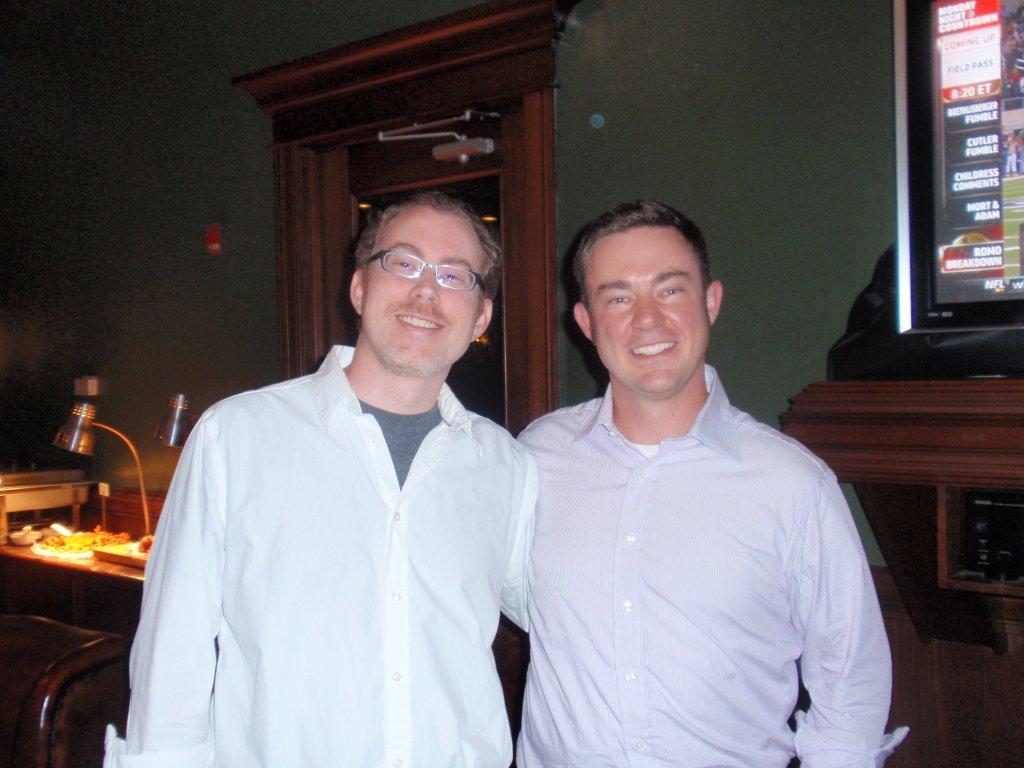
We've got an unbelievable group of people at Varrow...find below some photos of a handful of our people; these were from a team zipline thing we did, as well as the all-hands company meeting earlier this week. We do the all-hands meeting every quarter at Natty Greene's in Greensboro. It gives the management team an opportunity to review the previous quarter's results, give some insight into future direction, and recognize our great people for the work they've done. Most importantly though, it's an opportunity to get together as a team.
The presentation of the ugly orange blazer is a new "Tradition like no other" that we started this past quarter for the top rep of the quarter. Nice work Mark!




Friday, October 22, 2010
vBlock - Are customers buying?
Yes. In fact, we just got signed documents for an order on one today. This is a powerful solution and now with UIM v.2, the promise to our customers to be able to leverage this "private cloud" as an offering where they can provide compute, network and storage as a service to their internal customers is fast-becoming a reality.
The VCE initiative (VMware, Cisco, EMC) is the real deal and has caused quite a stir in the market. The battle lines are being drawn. Various solution "stacks" are being created. You see HP trying to create their stack with 3Com, 3Par, etc. (note: HP likes to buy companies that have the number "3" in them - is Level 3 next? :), you see Oracle trying to acquire their stack with Sun servers and storage, and you have IBM creating a stack of sorts by playing nice with Juniper and selling rebranded NetApp and a hodge podge of other storage arrays. Not sure what Dell is doing, but that is another blog.
What I like about the VCE (aka "vBlock") solution:
1) It's comprised of technology-focused companies - these companies are not looking to become consulting companies, or outsourcing companies. They aren't abandoning hardware for SW & Services. Each player is focused on its technology and puts its R&D into the technology represented in the vBlock stack.
2) it's open - one of the biggest complaints I hear from Oracle customers is they feel that they are locked into their SW and really have little-to-no leverage in negotiating price...why add hardware to this angst by buying Exadata (Oracle's version of vBlock, but only supports Oracle stuff)
3) The integration is real, not marketing - EMC PowerPath V/E provides VMware with multi-pathing capabilities it doesn't offer on it's own, the Cisco Nexus 1000v is a virtual switch that doesn't exist without VMware, EMC storage looks all the way up into the VM's in VMware and vice-versa, and UIM is the coup de grace in terms of integration across the various components of the vBlock.
4) One line of support -- the ding on best-of-breed has always been that there is not one line of accountability. VCE has done away with this by coming together and offering one phone line with one point of accountability for customer support across all components in the vBlock
Varrow is one of the few vBlock certified partners in the world and we are enjoying helping our customers build these data centers of the future one vBlock at a time.
The VCE initiative (VMware, Cisco, EMC) is the real deal and has caused quite a stir in the market. The battle lines are being drawn. Various solution "stacks" are being created. You see HP trying to create their stack with 3Com, 3Par, etc. (note: HP likes to buy companies that have the number "3" in them - is Level 3 next? :), you see Oracle trying to acquire their stack with Sun servers and storage, and you have IBM creating a stack of sorts by playing nice with Juniper and selling rebranded NetApp and a hodge podge of other storage arrays. Not sure what Dell is doing, but that is another blog.
What I like about the VCE (aka "vBlock") solution:
1) It's comprised of technology-focused companies - these companies are not looking to become consulting companies, or outsourcing companies. They aren't abandoning hardware for SW & Services. Each player is focused on its technology and puts its R&D into the technology represented in the vBlock stack.
2) it's open - one of the biggest complaints I hear from Oracle customers is they feel that they are locked into their SW and really have little-to-no leverage in negotiating price...why add hardware to this angst by buying Exadata (Oracle's version of vBlock, but only supports Oracle stuff)
3) The integration is real, not marketing - EMC PowerPath V/E provides VMware with multi-pathing capabilities it doesn't offer on it's own, the Cisco Nexus 1000v is a virtual switch that doesn't exist without VMware, EMC storage looks all the way up into the VM's in VMware and vice-versa, and UIM is the coup de grace in terms of integration across the various components of the vBlock.
4) One line of support -- the ding on best-of-breed has always been that there is not one line of accountability. VCE has done away with this by coming together and offering one phone line with one point of accountability for customer support across all components in the vBlock
Varrow is one of the few vBlock certified partners in the world and we are enjoying helping our customers build these data centers of the future one vBlock at a time.
Subscribe to:
Posts (Atom)